- How To Avoid Construction Schedule Delays?
- 1. Schedule Risk Shifts As The Project Advances
- 2. Field Communication Drives Schedule Discipline
- 3. Importance Of Shared Communication In Avoiding Construction Schedule Delays?
- What Are The Main Types Of Construction Schedule Delays?
- 1. Excusable Delays
- 2. Which Are The Non-Excusiable Delays?
- 3. What Are Critical Delays?
- 4. What Are Concurrent Delays?
- Things To Remember About Construction Schedule Delays
Where Construction Schedules Break Down And How To Stay In Control?
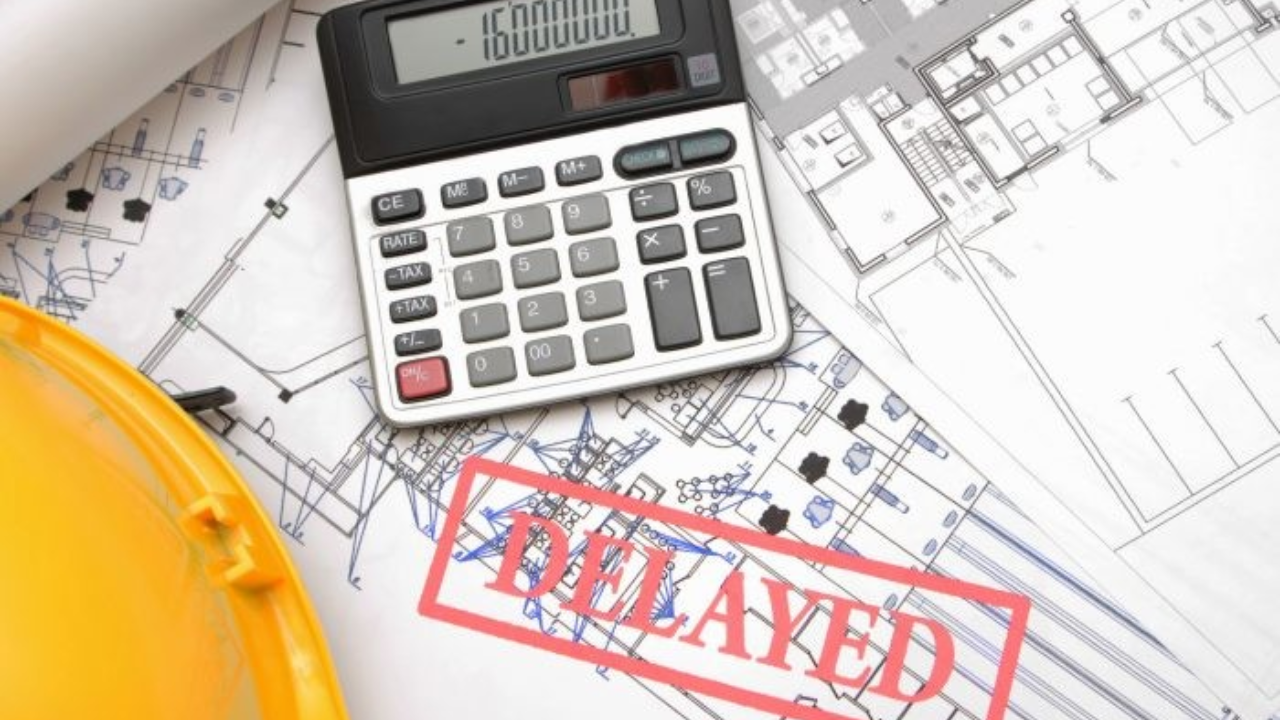
Construction timelines do not fail due to a single major event. Thus, a plethora of things often fail simultaneously at various stages of the project, leading to construction schedule delays.
Hence, these factors often lead to a lapse in the overall timeline. Moreover, these include things like early design coordination and final inspections.
Moreover, every relevant stage generally introduces some of the greatest crises. Hence, this includes everything, starting from early design coordination to final inspection.
Thus, the leaders should be accustomed to the system. Leaders who understand where schedules typically break down are better positioned to maintain control from kickoff through closeout.
Hence, this article explains how the risks can often lead to construction schedule delays.
The following infographic shows the major risks by project phase.
How To Avoid Construction Schedule Delays?
You should take multiple factors into consideration to avoid situations of construction schedule delays.
Here are some of the main factors that you should consider as a leader to avoid problems later.
1. Schedule Risk Shifts As The Project Advances
Pre-construction planning generally sets the tone. Moreover, the biggest risk factors include gaps in drawing and incomplete definitions.
Additionally, local regulatory bodies often delay issuing permits and permissions, which are among the biggest hurdles.
The crew has to overcome these hurdles even before starting. Then slowly, the procurement stage arrives.
As a result, the project’s focus shifts to material flow and vendor coordination. Moreover, the long.
Long lead items and freight timing create dependencies that must align precisely with field sequencing.
Without clear visibility into delivery timelines and staging plans, field crews are forced to adapt in real time.
Once construction begins, risk becomes more visible and more complex. Sitework exposes projects to weather variability, equipment reliability concerns, and unknown subsurface conditions.
Structural and MEP phases introduce dense trade activity. Crews operate in shared spaces, inspections must be coordinated precisely, and material staging must support a tight sequence.
As a result, even minor misalignment can ripple across multiple trades and compress available float. Furthermore, the late-stage phases carry their own challenges.
Finishes require coordination between specialty contractors, punch lists expand as owners review completed areas, and documentation must be accurate for final approval.
Hence, at this point, the margin for recovery narrows significantly. Schedule adjustments require careful sequencing rather than reactive decision-making.
2. Field Communication Drives Schedule Discipline
Schedules are built on dependencies. When one task shifts, several others follow. Field leaders must be able to communicate changes immediately to maintain momentum.
Delayed updates or fragmented communication channels slow response time and introduce confusion across trades.
On large job sites or multi-location projects, a consistent communication infrastructure is critical.
Many contractors rely on nationwide two-way radio systems to maintain direct, real-time contact between supervisors, foremen, and distributed crews.
Unlike inconsistent cellular service, purpose-built push-to-talk systems provide reliable coverage across regions, supporting coordinated execution from excavation through final turnover.
3. Importance Of Shared Communication In Avoiding Construction Schedule Delays?
Clear communication supports more than productivity. It allows supervisors to confirm inspection readiness, coordinate deliveries, and respond quickly to safety concerns.
Furthermore, this also helps to keep subcontractors aligned with the project sequence.
When teams operate from a shared communication platform, schedule adjustments can happen in minutes rather than hours.
This level of responsiveness strengthens accountability across the jobsite and reduces downtime caused by avoidable misunderstandings.
Construction schedule risk does not remain static. It evolves as operational complexity increases and as project phases shift.
Contractors who recognize these transitions and build disciplined coordination into daily field operations maintain stronger control over timelines and project outcomes.
For a detailed breakdown of construction schedule risk factors by project phase, review the resource here.
What Are The Main Types Of Construction Schedule Delays?
There are mainly two types of delays. These delays include excusable delays and non-excusable schedule delays. Let us understand in detail the basic difference between them.
1. Excusable Delays
The excusable delays are the ones that remain reasonable and unforeseen. These delays are generally not under the control of the contractor or the authorities that control construction.
Hence, this can include situations like natural calamities like fire, flood, earthquakes, and others.
Additionally, these changes can also be caused by the changes that were initiated by the owner.
Furthermore, errors in the plans, later omissions in the design doc, and other unplanned changes can often lead to large issues.
In addition, the delayed responses from government authorities and regulatory bodies can lead to long-term delays.
2. Which Are The Non-Excusiable Delays?
Non-excusable delays are those that were under the control of those performing the construction task.
Hence, the contractors, the builders, and the other accountable parties remain absolutely responsible for the delays.
Moreover, examples of these non-excusable delays often include the delayed delivery of deliverables.
Furthermore, this can involve overall late performance and execution-related errors. The late performance of other performers on whom the contractors depend can also cause delays.
Additionally, late performance by suppliers and faulty job performance can degrade the overall quality of the project and cause delays in the long run.
Non-excusable delays generally have to be compensable. Thus, the clients can seek compensation after the project suffers from these types of delays.
3. What Are Critical Delays?
Delays that generally do not affect the project’s timeline are considered non-critical. Thus, the excusability of a delay generally depends on the criticality of the delay.
Hence, a critical scheduled delay is one that directly impacts the project’s delivery deadline.
Thus, delays that do not significantly delay activities do not actually require much attention.
However, delays involving significant capital investment generally require the attention of the parties involved.
4. What Are Concurrent Delays?
The owner, contractor, client, subcontractors, and other parties are all very much dependent on each other.
Hence, at times, the fault of multiple parties involved in the project can easily lead to various delays.
Thus, you should accurately determine each party’s contributions to construction schedule delays.
Moreover, the parties involved must technically analyze the schedules to determine each party’s contribution to the delay.
Things To Remember About Construction Schedule Delays
Most types of construction schedule delays affect the work in multiple ways. Moreover, a delay does not just hamper the work, but it also hampers the reputation of the parties involved in the project.
Thus, accountability plays a major role in avoiding delays and hindering tasks.

Share this article: