- Understanding Income Tax Notice Section 142(1)
- Legal Framework Of Income Tax Notice Section 142(1)
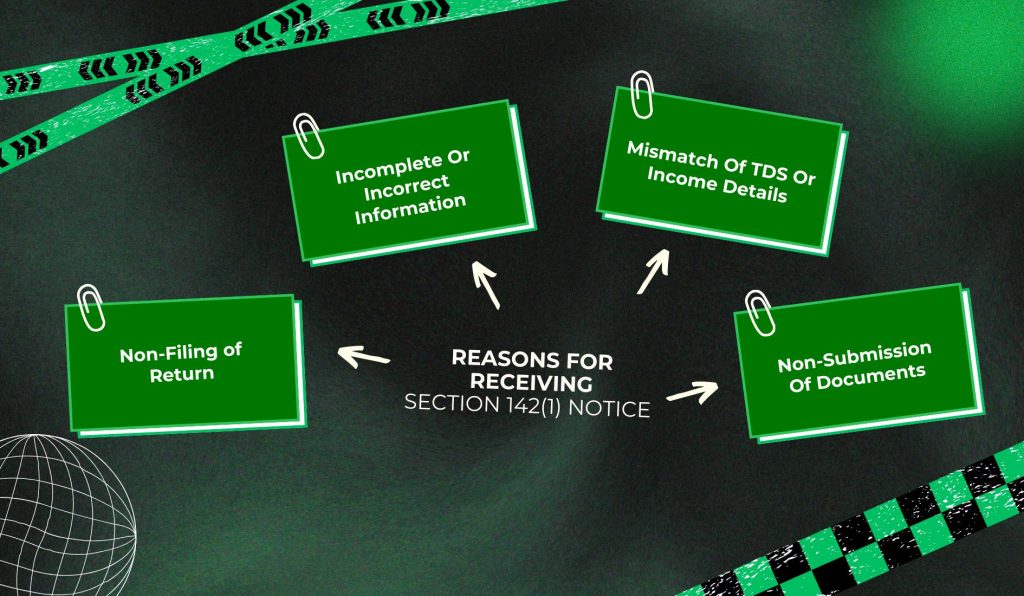
- Reasons For Receiving Section 142(1) Notice
- 1. Non-Filing of Return
- 2. Incomplete Or Incorrect Information
- 3. Mismatch Of TDS Or Income Details
- 4. Non-Submission Of Documents
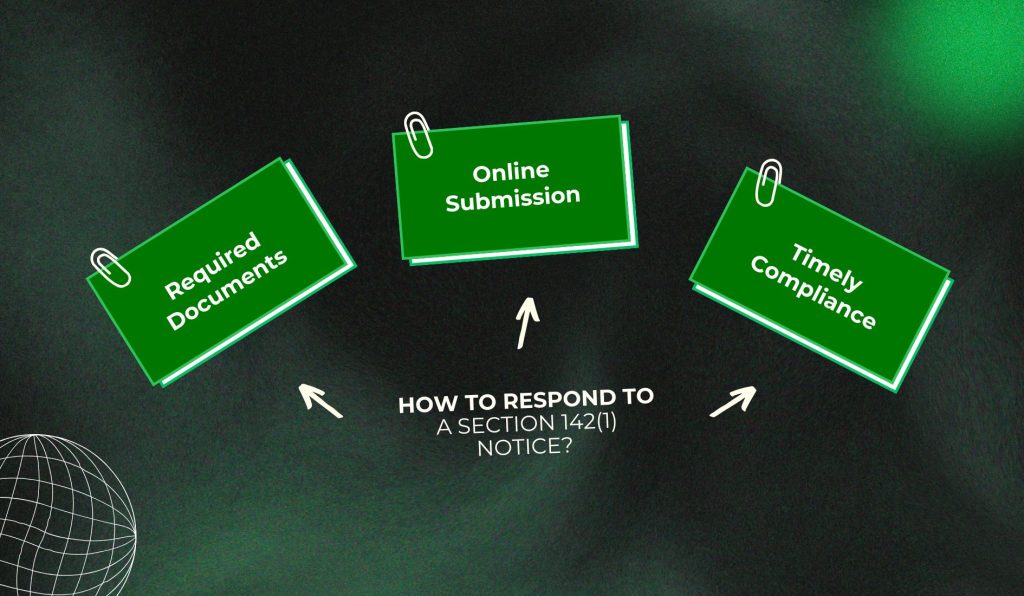
- How To Respond To A Section 142(1) Notice? Step-By-Step Guide
- 1. Required Documents
- 2. Online Submission
- 3. Timely Compliance
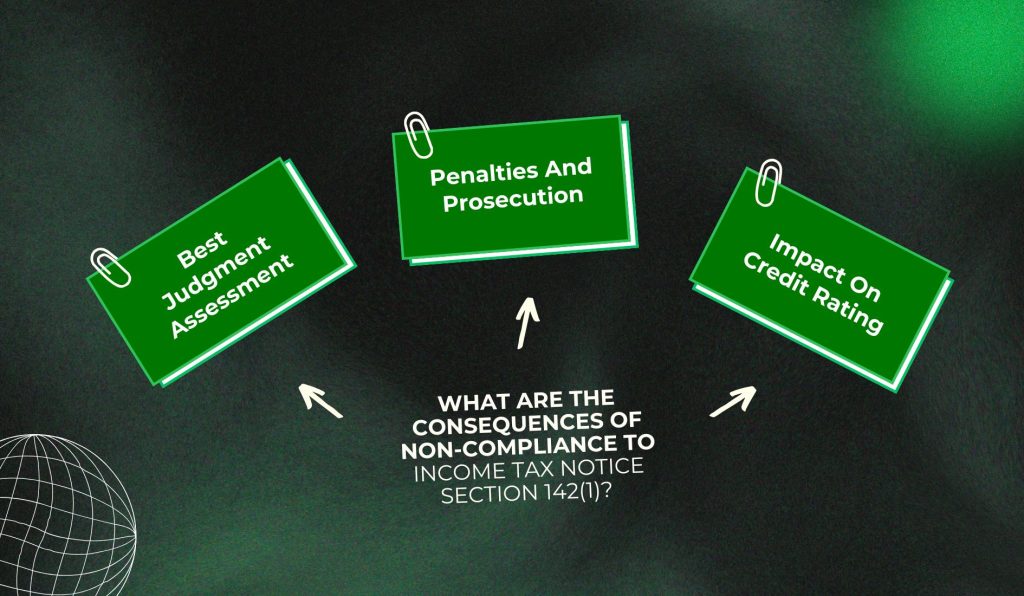
- What Are The Consequences Of Non-Compliance To Income Tax Notice Section 142(1)?
- 1. Best Judgment Assessment:
- 2. Penalties And Prosecution:
- 3. Impact On Credit Rating:
- Consider These Things When You Receive Income Tax Notice Section 142(1)
- Frequently Asked Questions
- 1. What Is Income Tax Notice Section 142(1)?
- 2. Why Did I Receive A Section 142(1) Notice?
- 3. How Do I Respond To A Section 142(1) Notice?
- 4. What Documents Are Required For The Response?
What Is An Income Tax Notice Under Section 142(1)?
Section 142(1) is when the Income Tax Department asks you questions about your income.
They send you a notice saying things like:
“Please file your tax return,” or “Show us your income details,” or “Explain where this money came from.”
Since it is not possible for the tax officer to decide exactly how much tax you should pay without proper knowledge. Hence, this section is intended to ensure that they fully comprehend your income.
Statistics: A notice sent by the Income Tax Department when they need additional information from the taxpayer in order to finish assessing their income.
This includes asking the taxpayer to file their return or explain certain information on their income. This section is not a punishment but simply a way for the tax officer to fully understand the taxpayer’s income before determining the amount of tax they should pay.
Moreover, the number of taxpayers receiving this notice has increased in recent years.
This is due to improvements in technology and the department’s use of advanced tools and systems.
The income tax department uses computers and Artificial Intelligence systems to cross-check information obtained from banks and other places. Even with minor discrepancies, they send out these notices.
In the near future, in 2025-26, the number of Section 142(1) notices sent to taxpayers will increase. Thus, the tax system will become more digital and technologically advanced, making this notice more crucial than ever.
Understanding Income Tax Notice Section 142(1)

Under Section 142(1) of the Income Tax Act, 1961, the Assessing Officer is empowered to call for information in case any additional information is required to complete the income tax assessment.
Hence, the officer seeks the taxpayer to file a return, produce documents, or explain particular income details by issuing this notice.
Thus, its major role is to ensure proper tax calculation based on proper information.
Legal Framework Of Income Tax Notice Section 142(1)
It falls within the assessment procedure as laid down under Section 142 (1) of the Income Tax Act, 1961.
It legally empowers the Income Tax Department to call for clarification before finalising the assessment. Hence, this ensures that no anomaly is committed by the assessing officer.
It provides the taxpayer with an equal opportunity to present a satisfactory explanation of their income or the mistake committed.
Reasons For Receiving Section 142(1) Notice
1. Non-Filing of Return
If any taxpayer fails to submit their income tax return within the due time, the Assessing Officer may issue a notice under Section 142(1) and request filing.
2. Incomplete Or Incorrect Information
The notice is generated for missing income details, incorrect deductions, or unclear disclosures in the return, as the department seeks clarification.
3. Mismatch Of TDS Or Income Details
A common reason for this mismatch is the difference between the income shown on the return and the information available with the department, such as TDS data, bank interest, or salary details.
4. Non-Submission Of Documents
In case of failure to submit relevant documents, such as income proofs or expense details, at the time of assessment, a notice may be issued demanding their submission.
How To Respond To A Section 142(1) Notice? Step-By-Step Guide
First, study the notice thoroughly to comprehend the required information.
Second, gather all necessary documents, ensuring that responses are accurate and appropriate. Finally, provide a response within the specified period.
1. Required Documents
Common documents include income proofs, bank statements, salary slips, Form 16, Form 26AS, investment proofs, and expenditure statements.
2. Online Submission
In most cases, the response must be filed through the Income Tax Department’s e-filing portal.
Thus, the taxpayer has to log in, select the notice, upload documents, and provide an explanation on the site.
3. Timely Compliance
You should respond within the due time. Moreover, A delayed or absent response can result in serious penalties and a negative evaluation.
What Are The Consequences Of Non-Compliance To Income Tax Notice Section 142(1)?
Where the taxpayer fails to respond, the Assessing Officer may complete the assessment on the basis of the available information, thereby increasing the taxpayer’s tax liability.
1. Best Judgment Assessment:
Non-compliance, in this case, is subject to penalty as per Section 271(1)(b), or a prosecution as per Section 276D of the Income Tax Act.
2. Penalties And Prosecution:
Failure to address tax notices can have repercussions for financial credibility and, indirectly, influence loan approval and creditworthiness.
3. Impact On Credit Rating:
Failure to address tax notices can have repercussions for financial credibility and, indirectly, influence loan approval and creditworthiness.
Consider These Things When You Receive Income Tax Notice Section 142(1)
Section 142(1) is an integral part of the procedure that assesses income tax. Hence, it is an essential tool that ensures proper information is obtained from the taxpayer.
Therefore, this section is not an issue but rather an action that should be appropriately addressed. Appropriate action and records will save the taxpayer from many penalties.
Frequently Asked Questions
Here are the answers to some of the most commonly asked questions about the income tax notice section 142(1).
1. What Is Income Tax Notice Section 142(1)?
The income tax department asks you questions about your income while sending you questions like “Please file your tax return,” or “Show us your income details,” or “Explain where this money came from.”
Hence, seek professional help when you receive any such message. Non-compliance with tax can cause terrible issues.
2. Why Did I Receive A Section 142(1) Notice?
The tax officers try to fully comprehend your income. Moreover, the officers find it difficult to determine the exact amount of tax that you should pay without proper knowledge of your income.
3. How Do I Respond To A Section 142(1) Notice?
You should properly respond to the income tax notice section 142(1) on time. Non-compliance can lead to penalties.
You should respond to the notice with documents including income proofs, bank statements, salary slips, Form 16, Form 26AS, investment proofs, and expenditure statements.
4. What Documents Are Required For The Response?
Several documents, including income proofs, bank statements, salary slips, Form 16, Form 26AS, investment proofs, and expenditure statements, are crucial for responding.
Share this article: