- What Is The Need for Financial Inclusion And How Can Micro ATM Help?
- What Is A Micro ATM?
- Key Features Of Micro ATMs
- 1. Hand-Held Portable Device
- 2. API Integration
- 3. Secure Transactions Through Micro ATMs
- Micro ATMs And Financial Inclusion
- How Does Micro ATM Help People In Remote Areas?
- 1. Doorstep Banking
- 2. Easy Process With The Help Of Adhar Card
- 3. Does Not Require Internet Connectivity
- 4. Multi-Utility Benefits Distributions
- 5. Cost-Effective
- Business Opportunities With Micro ATMs
- How Do Micro ATMs Make Modern Banking Systems Available In Rural Setups?
- Challenges And Limitations
- What Is The Future Of Micro ATMs?
- Things To Remember About Micro ATM
- Frequently Asked Questions
- 1. What Is A Micro ATM?
- 2. What Is The Difference Between A Micro ATM And A Pos?
- 3. How Is MATM Different From ATM?
Micro ATMs: Empowering Financial Inclusion in Rural India
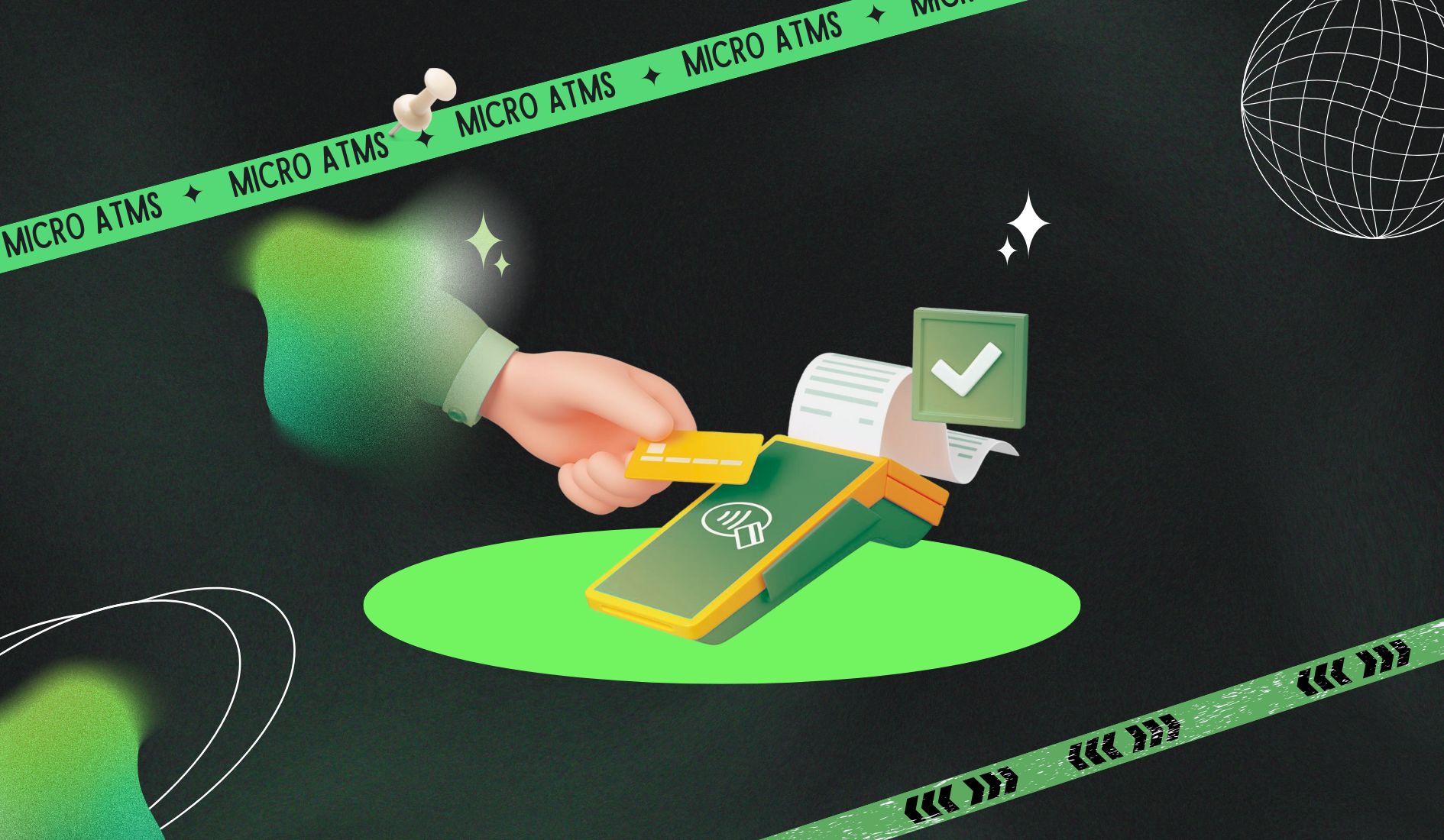
In the villages where a proper bank or banking system doesn’t exist, Micro ATMs have an impactful result. It is safe and secure, and at the same time, hassle-free.
By using an Aadhar card and a fingerprint, people can make transactions. It might be some deposits, withdrawals or transferring funds in areas that have no bank, especially.
Rather than going to a city for banking purposes, they can do it from their own village. In this case, they have to visit a shop first and then a Business Correspondent (BC) would assist them.
Micro ATMs made the banking system local. It involved people in digital banking, too. People can get micro insurance or small loans easily without being in a long queue.
What Is The Need for Financial Inclusion And How Can Micro ATM Help?
Financial inclusion means helping everyone to use the bank services. But the main problem occurs in rural areas. In rural areas, it is quite important to have a proper banking system.
A proper banking system helps villagers to get loans easily and to improve their lifestyle. But rural people genuinely face a few problems. Like,
- Network issues sometimes make online transactions difficult.
- Due to the lack of bank branches, villagers had to travel far to do bank-related work.
- Most people are completely unaware of digital banking.
- Bank paperwork and rules are too complicated to understand.
- For all of these issues, villagers rely on local moneylenders who take a very high rate of interest from local people.
What Is A Micro ATM?
Basically, it is like a mini bank. A Business Correspondent (BC) or an authorised agent from the bank operates this.
It is a handheld machine that helps to get minimal banking services without going to the bank far away from the village.
Using this device, people can easily do the exact same work they do in a bank. Like checking bank balance, money withdrawal and fund transfer.
These devices use Aadhaar-enabled Payment Systems (AEPS) where transaction happens by using fingerprints.
It is very easy to use and convenient, too. For the people who don’t know digital banking, it is life saver.
To fix up the infrastructure of the rural, remote and semi-urban areas, this is a necessity. Micro ATMs are indeed a solution to the gap between the high-tech digital banking system and the rural areas’ banking system.
Key Features Of Micro ATMs

Micro ATMs generally make transactions easy and accessible to the rural populace. Here are the key features of Micro ATMs.
1. Hand-Held Portable Device
Micro ATMs function as small devices that are portable. Thus, a bank agent can always carry a Micro ATM around with them.
Hence, this offers added convenience to both operators and users. Micro ATMs reach places where accessing conventional ATMs is difficult.
2. API Integration
The Micro ATMs remain connected to the bank systems while using the Micro ATM APIs.
Hence, the micro ATMs transfer data between devices in a more secure way.
3. Secure Transactions Through Micro ATMs
Thus, the safe and secure networks ensure that most of the issues are addressed during the transactions.
Micro ATMs And Financial Inclusion
Using biometric (fingerprint) authentication, transactions are done in this process. In remote and rural areas, the Micro ATMs are the saviour.
With the help of Business Correspondent (BC), it is so easy to access. It also doesn’t need high speed internet connection or a highly costly infrastructure.
That is why it is anyway suitable for the villagers to get access to. Checking the bank balance, sending money to someone else, and getting loans have become just a piece of cake for them.
Micro ATMs also provide the users access to other services like Micro Credit and electronic banking in rural areas.
How Does Micro ATM Help People In Remote Areas?

Micro ATMs have helped rural India to get access to liquidity in multiple ways. Here are some of those ways.
1. Doorstep Banking
It has become doorstep banking. People don’t need to travel a long way to visit the bank’s branch in the city.
All banking services are available in local shops, and through authorized agents, they can get all facilities.
2. Easy Process With The Help Of Adhar Card
By just using the Aadhar card and fingerprint, villagers can avail all the services that are available in the bank.
In this case, they don’t even have to have a debit card or enter a pin to withdraw the money.
3. Does Not Require Internet Connectivity
In the low range of the internet, these Micro ATMs can work well. It doesn’t need a high level of internet connectivity.
4. Multi-Utility Benefits Distributions
We can use Micro ATMs for our personal transactions, and on the other hand, we can access all the government schemes.
It helps in distributing Direct Benefit Transfers (DBT). We can also withdraw pensions and subsidies without hassle.
5. Cost-Effective
Micro ATMs are way cheaper than installing a traditional ATM in rural areas. The cost-effectiveness of Micro ATMs makes them easy to set up in rural areas.
Business Opportunities With Micro ATMs

Local shopkeepers and vendors can become authorized agents of the bank and run a Micro ATM service through Finkeda.
To begin with, they need to register on the Finkeda platform. Thereafter, require a few KYC documents like Aadhar, Pan number and bank details to get a handheld Micro ATM.
This machine works just by using a basic internet connection. In the areas of weak internet connectivity, it works well. Once it is activated, villagers can use it for
- Find transfer
- Checking bank balance
- Cash withdrawal
- Aadhaar-enabled transactions (AEPS)
It is so beneficial for a merchant as he gets commissions for each and every successful transaction.
If someone even checks the bank balance, the shopkeeper gets a minimum amount of money.
The merchant receives instant money on Finkeda digital wallet for transactions. No necessity to install complex infrastructure.
How Do Micro ATMs Make Modern Banking Systems Available In Rural Setups?
As a result, these ATMs make modern banking systems available rurally. People benefit in many ways.
- Payments like pensions and DBT become easily accessible for these devices.
- Reduces reliance on local moneylenders.
- Helps to gain digital trust and financial inclusion in remote villages.
Challenges And Limitations
If we study and analyse the data given by the Reserve Bank of India(RBI) and the World Bank, then we would notice that only 17% banks are located in rural areas.
But in big cities, getting cash from an ATM is so easy. Because in each and every alley there is an ATM.
As there are a few ATMs available in villages, it is very important to have Micro ATMs there. They are small and convenient.
And local shopkeepers can operate it so easily. Local shopkeepers who are Business Correspondents (BCs) are officially appointed by the bank.
With every transaction, BC receives an amount of commission. This device may look very normal buy plays a significant role in rural and remote villages.
In the era of using UPI, some people still depend on cash. So it is better to get acquainted with a device like this in that rural village.
The Ministry of Finance stated that the number of beneficiaries of government welfare schemes is more than 100 crores of Indians.
In a city like Chennai, the labour class people use a Micro ATM to get cash, not the traditional ATM. And they also get cash in hand as their salary.
As the use of UPI is going up, some people still prefer paying in cash. So here is the necessity of Micro ATM.
What Is The Future Of Micro ATMs?

Micro ATMs are creating significant role in enhancing financial inclusion. The usage of Micro ATMs is going up day by day.
Many new technologies have been applied to this device. For that, it became more secure and efficient.
Biometric authentication, which uses fingerprints, makes transactions safe and secure.
AI-based technologies also find out fraud. So it is basically safe to use this. Although it is like mini banking and financial hubs. It is reliable and makes the banking system easily available in the rural communities.
Things To Remember About Micro ATM
People of India can consider Micro ATMs as a significant tool in empowering financial inclusion in our country.
In areas, especially where the banking system is limited. Cash withdrawal, fund transfer and deposits became so easier stuff to do because of this.
Micro ATMs help India to take a step ahead in the future of the banking system. It has make banking system easy.
Frequently Asked Questions
Here are the answers to some of the most commonly asked questions about Micro ATMs
1. What Is A Micro ATM?
Micro ATMs are portable devices that allow people to use the features of modern-day banking where there is a lack of networks.
2. What Is The Difference Between A Micro ATM And A Pos?
Micro ATMs help people to get banking services like withdrawal, payment, and other things.
On the other hand, POS allows users to pay with their credit cards. People can find similarity in technology, but the purpose remains completely different.
3. How Is MATM Different From ATM?
MATM stands for Micro ATMs. Moreover, the Micro ATM are portable device that can be carried around by the agent of the bank.
It allows users to get access to modern banking in areas where it is difficult to use conventional ATMs.
Share this article: