- Understanding The Financial Landscape
- What Is The Meaning Of Green Financing?
- Core Differences Between Green and Traditional Financing
- What Are The Financial Instruments In Green and Traditional Financing
- How Does Green Financing Influence The Other Aspects?
- 1. Economic Implications: Cost And Return Analysis
- 2. Environmental And Social Impact Considerations
- What Are The Challenges And Limitations Of Green Financing?
- Future Outlook: Trends and Innovations
- What Is The Importance Of Making Informed Financial Decisions?
- Frequently Asked Questions
- 1. What Is Green Finance?
- 2. What Is The Difference Between Climate Finance And Green Finance?
- 3. What Is A Green Loan?
Green Financing vs Traditional Financing: Key Differences
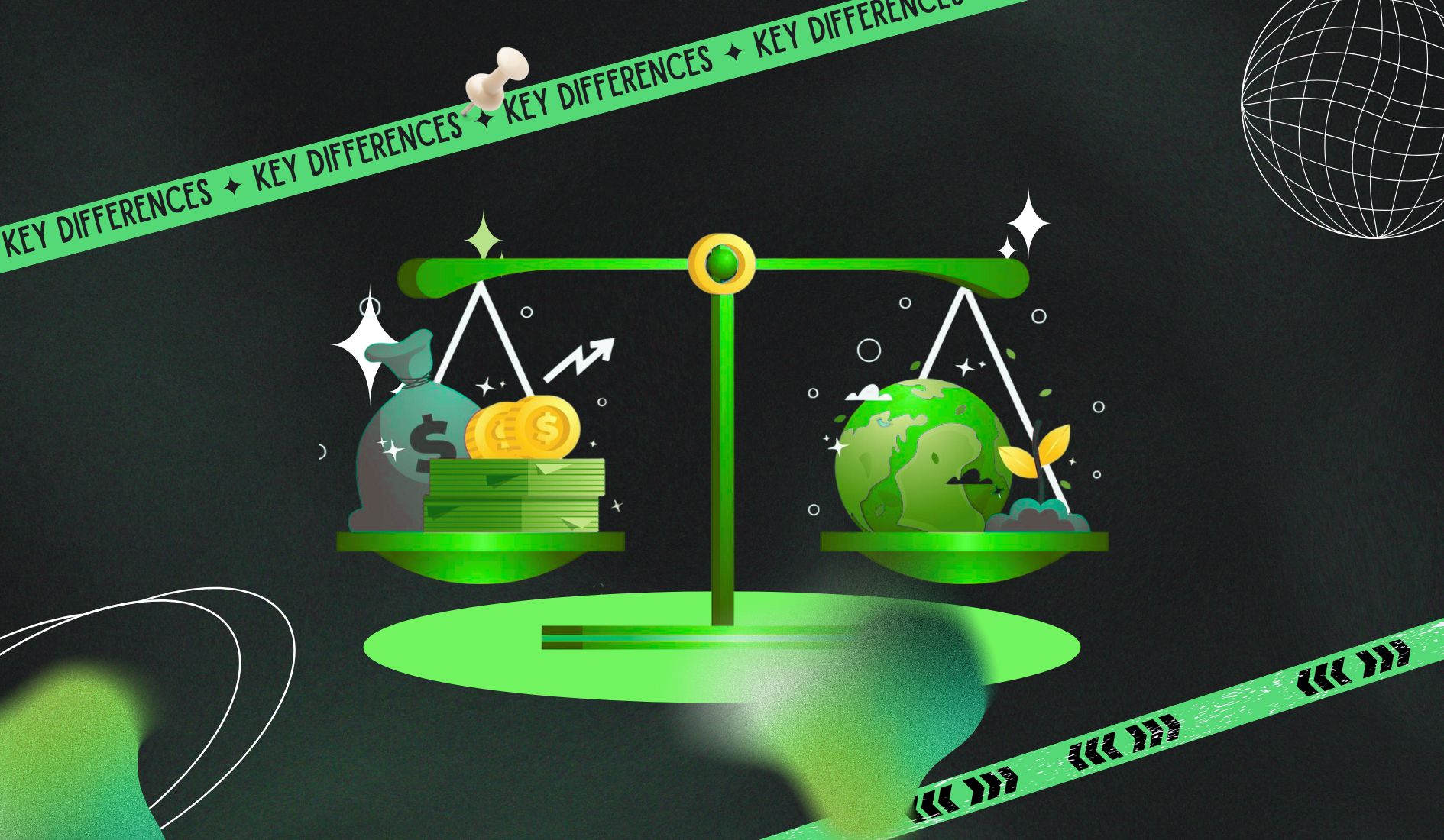
Nowadays, financing is not something related to profit but responsibility. Due to the major problems of environmental degradation and climate change issues, green financing has become an alternative to traditional financing.
To better understand how the financial system supports sustainable development, knowledge of green and traditional financing is needed.
Understanding The Financial Landscape

Financing stands for giving money to individuals, governments, or companies so that they can use the money to do their work. They may start a business, make a company, or develop projects.
At an early stage, financing was centralized only to gain profit margins. If the project was legal and good enough to make money, they didn’t care about its harmful impacts.
Increasing pollution levels or the environment being harmed because their project didn’t bother them much.
These types of financing projects caused environmental degradation. If we talk about climate change, air pollution, or depletion of natural resources, it is because of these financing projects.
But recently, people started questioning the actual investment of money and its impact on the environment and the planet.
For the awareness of people, the concept of green financing has been invented. It is basically one type of financing that only allows providing money when the project is totally safe for the environment.
Projects like renewable energy, green buildings, and pollution control are highly appreciated by people. And as they are friendly to the environment, green financing provides money to execute these projects.
Profits don’t matter when it comes to green financing. The only thing that matters here is supporting the environment and the usage of sustainable development.
What Is The Meaning Of Green Financing?
Green financing basically stands for raising funds to support projects that support environmental improvement.
Instead of giving money to an unnecessary project, green financing provides money for Solar panels, energy-efficient buildings, or other eco-friendly works.
To ensure the contribution of green financing towards beneficial activities, it follows the green loan principles.
Core Differences Between Green and Traditional Financing

Whenever we talk about the difference between green and traditional finance, we get to see a different approach and goal.
Traditional financing is all about getting a profit and maintaining that. And if we start talking about green financing, we will say that it is only used for environmentally friendly projects, such as renewable energy and sustainable agriculture.
Green financing talks about social and environmental risks, but on the other hand, traditional financing discusses financial risks.
What Are The Financial Instruments In Green and Traditional Financing
When it comes to raising money, both green and traditional financing use bonds and loans. In green financing, green bonds and green loans are being used. In the case of traditional financing, bonds and loans are used.
Green financing works for environmentally friendly projects such as renewable energy or pollution control.
And traditional financing works for any legal business activity, without looking at environmental impact.
How Does Green Financing Influence The Other Aspects?
Green Financing has several positive impacts as well. Hence, here are some impacts of Green Financing on the economy, the environment, and society.
1. Economic Implications: Cost And Return Analysis
At the beginning, the costs of green financing may seem high. But in the long term, it requires little interest or government incentives.
It is way safer than traditional financing. It returns to a decent profit while providing environmental benefits.
And traditional financing is based on a normal cost structure. It is harmful to the environment because it focuses only on profit. And it does not count environmental incentives.
2. Environmental And Social Impact Considerations
Green financing also speaks in favor of environmental and social benefits.
It takes money but uses it well, for example, in eco-friendly projects that reduce pollution, protect natural resources, and support cleaner energy and sustainable development.
On the other hand, traditional financing does not support environmental and social outcomes.
It rather focuses on financial profit that might harm nature or the environment or deepen social inequalities.
What Are The Challenges And Limitations Of Green Financing?

Sometimes the investors don’t understand what is green, as there is nothing considered under that name.
Green projects are expensive at the beginning. So, sometimes it stops people from even starting.
And in the case of traditional financing, there is less bother about environmental upgradation. It helps some industries that cause harm or pollution in the environment.
Future Outlook: Trends and Innovations
With the help of more green loans as well as green bonds, green financing is going to be extended in the days ahead.
And government and banks are desperately working to work with more climate-friendly projects. Traditional financing is also getting its way to maintain continuity, but with the use of the ideas of green financing.
Overall, we can conclude that finance is moving forward and looking to the future, while remaining sustainable.
What Is The Importance Of Making Informed Financial Decisions?
After reaching the conclusion point, one thing needs to be said. The only difference between green and traditional financing is how they treat the environment.
Where the green environment focuses on nature-friendly projects with a decent return on investment, and another financing option, traditional financing, only centers on one fact: profit and exceeding the profit margin.
If someone is thinking about future security, balancing profit and responsibility, then they can lean on green financing. It might be out of budget at the beginning, but totally worth it in the end.
Frequently Asked Questions
Here are the answers to some of the most commonly asked questions about Green Financing.
1. What Is Green Finance?
Green finance provides funding for projects that protect the environment and support sustainable development goals worldwide.
2. What Is The Difference Between Climate Finance And Green Finance?
Climate finance targets climate change actions, while green finance supports broader environmental projects like clean energy and pollution control.
3. What Is A Green Loan?
A green loan finances eco-friendly projects such as renewable energy, green buildings, or sustainable infrastructure initiatives.
Share this article: