- Key Takeaways
- Three Things People Mean By "$2000 Federal Direct Deposit"
- Where the Tariff Dividend Idea Came From
- Why It's Probably Not Happening (The Math Problem)
- The Real Money Moving Right Now
- How To Tell a Real IRS Message From a Scam
- Should You Plan Your Budget Around This Payment?
- A Simple Framework for Handling "Maybe Money"
- Common Beginner Mistakes to Avoid
- Editorial Note
- Frequently Asked Questions
- Is the $2000 federal direct deposit real?
- How do I check if I'm getting a real IRS refund?
- Is the Warrior Dividend the same as the tariff dividend?
- What should I do if I get a text about a $2,000 deposit?
- Could Congress still pass the tariff dividend later?
- Does the tariff refund program mean consumers will receive a refund?
- Is the IRS sending stimulus checks in 2026?
$2000 Federal Direct Deposit: Truth, Rumors & What to Do Now

Is the $2000 federal direct deposit real in 2026?
No, as of June 2026, there is no approved $2000 federal direct deposit or stimulus check. The idea refers to a proposed “tariff dividend,” but it has not passed Congress, and the IRS has not announced any payments. Any current $2,000 deposits people are receiving are typically tax refunds, state payments, or unrelated programs, not a new federal stimulus.
A $2000 federal direct deposit is the term people are using to refer to a viral claim about a possible government payment in 2026, often linked to a “tariff dividend.” The concept suggests the U.S. government could send out payments funded by tariff revenue.
It sounds like a stimulus check. But here’s the reality: as of mid‑2026, no such payment has been approved, funded, or scheduled, and the IRS has no process in place to send it.
That one fact clears up most confusion. But it doesn’t explain why:
- You keep seeing headlines about a $2,000 payment
- Your refund might look similar in size
- Or scam messages are suddenly everywhere
Let’s break down what’s actually happening.
Key Takeaways
- No federal law currently authorizes a universal $2000 deposit for all Americans.
- The idea, known as the “tariff dividend,” originated in a series of statements by President Trump in 2025 and 2026, not in enacted legislation.
- A February 2026 Supreme Court ruling on tariffs made the funding math even harder to pull off.
- Plenty of $2,000-ish payouts are real, like tax refunds or the tax-free $1,776 military payout. But they are entirely separate from a new consumer stimulus check.
- Scam texts and emails borrow the phrase “$2000 direct deposit” because it gets clicks, not because they’re from the government.
Three Things People Mean By “$2000 Federal Direct Deposit”

Before writing this guide, I reviewed dozens of viral posts, news stories, social media threads, and scam messages using the phrase “$2000 federal direct deposit.”
Most of them were referring to completely different things. That’s why it’s useful to separate the claim into three distinct categories.
This phrase gets used for three very different situations, and mixing them up is where most of the confusion starts.
1. The proposed tariff dividend. This is a political idea floated in speeches and social media posts, not an active payment program. Nothing has been signed into law.
2. A real tax refund. Plenty of taxpayers genuinely get back close to $2000 each spring once tax credits are factored in. That’s normal tax season math, not a special bonus.
3. A scam message. Some emails and texts borrow the exact phrase to look official, then push you to click a link or “verify” your bank details to “secure” the money.
| Viral Headline / Claim | Veracity Status | What It Actually Is |
| “Trump’s $2,000 tariff dividend is here” | Rumor / not yet law | A political proposal is still stuck in Congress |
| “Check your IRS refund: average $2,000+” | Real | Ordinary tax refunds boosted by credits like the EITC or Child Tax Credit |
| “Click to claim your $2,000 before it expires” | Scam | Phishing attempt using a fake urgency hook |
| “$1,776 Warrior Dividend for service members” | Real, but separate program | A Defense Department payment, unrelated to tariffs |
Where the Tariff Dividend Idea Came From
President Trump first raised the idea of a tariff-funded payment in mid-2025, suggesting that import tax revenue could be returned to households as a “dividend.”
By November 2025, he attached a specific number: at least $2,000 per person, excluding higher earners. Officials later said a formal proposal would still need congressional approval, since spending that size requires legislation, not just an announcement.
That’s the part many viral posts skip. A president can propose a payment. Only Congress can fund and authorize one, just as it did with COVID-era stimulus checks in 2020 and 2021.
Why It’s Probably Not Happening (The Math Problem)
Here’s where the numbers get in the headline. According to estimates from the Yale Budget Lab (2026), a $2,000 per-person rebate for households earning under $100,000 would cost roughly $450 billion.
Similarly, the Tax Foundation estimated broader versions of the proposal could cost between $280 billion and $600 billion, depending on how eligibility is structured.
Tariff revenue hasn’t come close to covering that. Projected 2026 collections were around $207 billion, far short of what a universal payment would need. Then, in February 2026, the Supreme Court struck down the tariffs the administration had relied on, further shrinking the revenue picture.
By spring 2026, analysts tracking the proposal described its odds of passing as very low, given the funding gap and thin congressional support.
This doesn’t mean the idea is dead forever. Congress could still revisit some version of it. But “could happen eventually” is very different from “is happening now,” and the second claim is the one spreading online.
The Real Money Moving Right Now
While the tariff dividend itself stays stuck in the proposal stage, a few related but separate payments are real. Knowing the difference helps you spot which headlines actually apply to you.
1. Tariff refunds to importers, not consumers. After the Supreme Court ruling, the government opened a portal for businesses to claim refunds on tariffs they’d already paid. This money goes to companies like retailers and shipping firms, not directly to individual taxpayers. Headlines about “$166 billion in tariff refunds” refer to this.
2. The Warrior Dividend for service members. Active-duty troops and eligible reservists received a one-time payment of exactly $1,776. The IRS and the Department of War officially confirmed this payout was structured as a completely tax-free supplemental housing allowance.
In an official statement on the initiative, Secretary of War Pete Hegseth noted that the dividend illustrates the administration’s direct focus on quality-of-life improvements to rebuild the military. Because the payout occurred around the same time that the tariff rumors intensified, many online posts mistakenly conflated the two.
3. The 2021 Recovery Rebate Credit. Back in 2024, the IRS sent automatic payments of up to $1,400 to people who hadn’t claimed a tax credit from their 2021 returns. That window closed in April 2025, but old screenshots about it still circulate, adding to the sense that “stimulus money” is available right now.
| Program | Who Receives It | Current Status | Typical Amount |
| Tariff dividend (the viral one) | Proposed for most U.S. adults | Not law; no payment date | $2,000 (proposed) |
| Tariff refunds via CAPE portal | Businesses/importers | Actively processing | Varies by company |
| Warrior Dividend | Active-duty military, reservists | Paid out already | ~$1,776 after tax |
| 2021 Recovery Rebate Credit | Eligible 2021 tax filers | Filing deadline passed (April 2025) | Up to $1,400 |
| State rebate programs (e.g., Alaska’s Permanent Fund) | Residents of specific states | Ongoing, state-specific | Varies by state |
How To Tell a Real IRS Message From a Scam
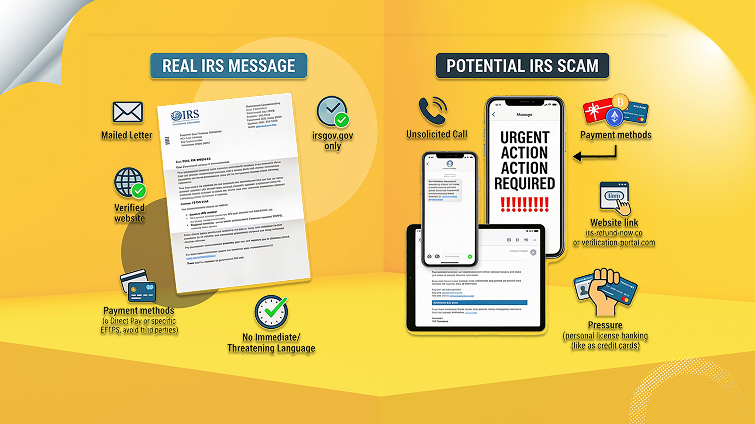
The IRS, Treasury, and consumer watchdogs have flagged a wave of fake messages using stimulus-style language. A few patterns show up again and again:
- Unsolicited contact. The IRS does not start communication by email, text, or social media. It always begins with a letter in the mail.
- Urgent action required. Phrases like “you must act now” or “first checks are going out” are designed to make you click before you think.
- Requests for payment to “release” funds. No legitimate government deposit requires you to pay a fee, purchase a gift card, or make a crypto transfer first.
- A link to a third-party site. Genuine direct deposits go straight to your bank account on file. They don’t route through an outside company’s portal.
- Pressure around personal or banking details. If a message asks you to “confirm” your Social Security number or account number to “secure” a deposit, that’s a red flag, not a formality.
If you want to check something for real, skip the link entirely. Go directly to IRS.gov, log in to your IRS Online Account, or call the IRS at 1-800-829-1040.
Important:
The IRS does not contact taxpayers by text, email, or social media about payments. Any message claiming you must “verify details” to receive a $2000 deposit is not legitimate, regardless of how official it looks.
Should You Plan Your Budget Around This Payment?
No, and that’s worth saying plainly. Until a bill is signed into law, there’s no payment to plan around, no date to circle, and no amount to count on.
Treat the tariff dividend the way you’d treat any rumor about a future raise at work: nice if it happens, but not something to spend against in advance.
A Simple Framework for Handling “Maybe Money”
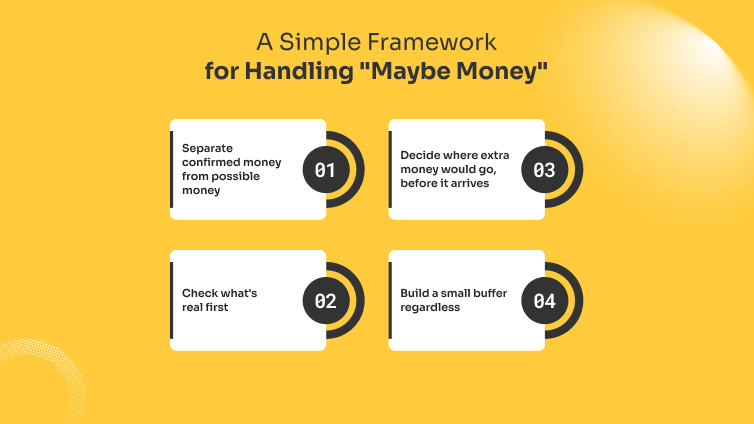
This applies whether it’s a rumored stimulus check, a possible bonus, or any windfall that isn’t guaranteed yet.
Step 1: Separate confirmed money from possible money. Your actual tax refund status (checkable on IRS.gov) is confirmed. A proposal in the news is not.
Step 2: Check what’s real first. Use the “Where’s My Refund?” tool for any return you’ve already filed, since that’s the only IRS deposit most people can currently expect.
Step 3: Decide where extra money would go, before it arrives. If you carry high-interest debt, like credit card debt, that usually comes first. If your remaining balances are on lower-interest loans, such as federal student loans, it’s often smarter to compare repayment plans before throwing extra cash at them, since some come with forgiveness paths or income-based options that change the math.
Step 4: Build a small buffer regardless. Even $200–$300 set aside in a separate savings account gives you more flexibility than waiting on a payment that may never arrive.
Common Beginner Mistakes to Avoid
- Clicking links in viral posts or texts that promise to “calculate” or “release” your $2,000. Legitimate payments never require this step.
- Spending against money you don’t have yet, whether that’s a rumored check or an estimated refund that hasn’t been approved.
- Sharing bank or Social Security details with anyone who contacted you first, even if the message looks like it came from the IRS.
Editorial Note
This article was prepared using publicly available information from IRS announcements, congressional discussions surrounding the proposed tariff dividend, Yale Budget Lab analysis, Tax Foundation estimates, and official government resources available as of June 2026.
Because legislation and federal payment programs can change, readers should verify any new developments through official government sources.
Frequently Asked Questions
Is the $2000 federal direct deposit real?
Not yet. It’s a proposal, sometimes called the tariff dividend, that hasn’t been passed into law. No payment date or IRS process currently exists for it.
When will the tariff dividend actually be paid? There’s no confirmed date. It would require Congress to pass legislation first, and as of mid-2026, there’s no active bill moving toward a vote.
How do I check if I’m getting a real IRS refund?
Use the official Where’s My Refund? tool on IRS.gov or the IRS2Go app. You’ll need your Social Security number, filing status, and exact refund amount.
Is the Warrior Dividend the same as the tariff dividend?
No. The Warrior Dividend is a separate, already-paid benefit for active-duty military and reservists, funded through defense spending rather than tariff revenue.
What should I do if I get a text about a $2,000 deposit?
Don’t click any links. Delete the message or report it, then check your actual refund or payment status directly through IRS.gov.
Could Congress still pass the tariff dividend later?
It’s possible, but unlikely in its original form, given the funding shortfall and lack of strong congressional support as of mid-2026. Watch official government sources, not social media, for updates.
Does the tariff refund program mean consumers will receive a refund?
Not directly. Those refunds are going to the businesses and importers that paid the tariffs, not to individual taxpayers.
Is the IRS sending stimulus checks in 2026?
No. As of June 2026, the IRS has not announced any new federal stimulus checks for the general public. Some online posts refer to a proposed “$2,000 tariff dividend,” but Congress has not approved the proposal, and no payment schedule exists.
Share this article: