- What Does 'Investing Wisely' Actually Mean?
- Why Most Beginners Get It Wrong (Before They Even Start)
- Before You Invest A Single Dollar: Three Things To Do First
- 1. Build Your Emergency Buffer
- 2. Clear High-Interest Debt First
- 3. Know Why You're Investing
- How Much Money Do You Need To Start Investing?
- The Basics: What You're Actually Buying
- Best Investments For Beginners
- Index Funds
- ETFs (Exchange-Traded Funds)
- Target-Date Funds
- Treasury Bills And Government Bonds
- Choosing Where To Open Your Account
- For Retirement Savings:
- For General Investing:
- For Employer-Sponsored Retirement:
- A Simple Framework To Start: The Four-Step Approach
- Step 1: Set A Clear Goal With A Timeframe.
- Step 2: Decide How Much Risk You Can Actually Tolerate.
- Step 3: Start With Diversified, Low-Cost Investments.
- Step 4: Contribute regularly and leave it alone.
- The Real Risk That Beginners Ignore
- The Power Of Compound Growth
- Here's A Quick Illustration:
- What You Should Probably Avoid As A Beginner?
- 1. Speculative Investments
- 2. Margin Trading
- 3. Hedge Funds
- A Financial Advisor Can Help Beginners
- Common Beginner Mistakes Worth Knowing
- Waiting For The 'Perfect Time' To Start.
- Putting Everything In One Stock.
- Checking Your Portfolio Every Day.
- Investing Money You Might Need Soon.
- Key Takeaways
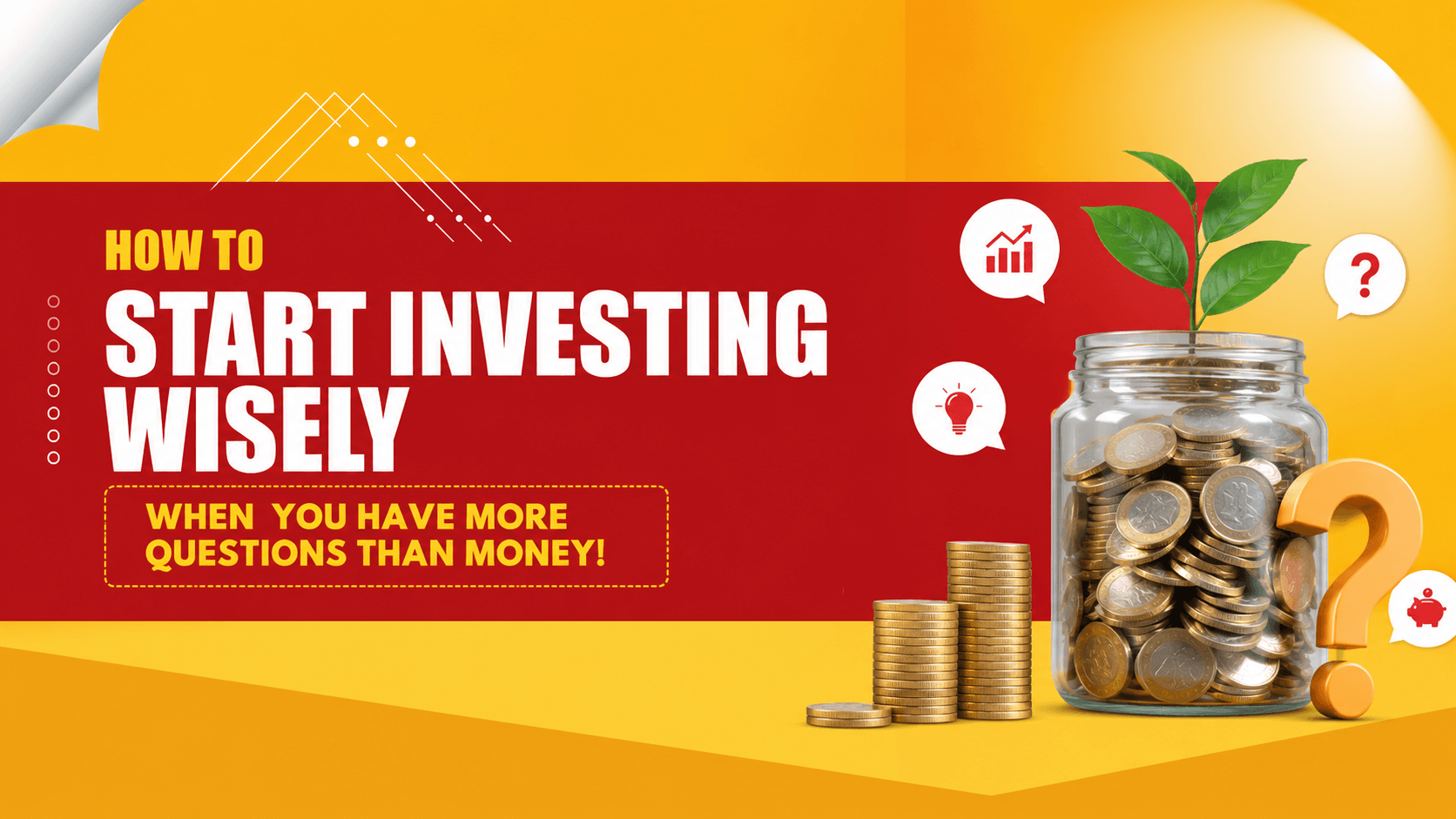
How to Start Investing Wisely When You Have More Questions Than Money!
I always inspire people to start investing as early as possible. However, investment is not easy. That’s something everybody should get straight!
As you start investing for the first time, you hear terms that you haven’t heard in your lifetime. Just Google “how to start investing,” and you see terms like P/E ratio primer flashing in front!
In simpler words, when it comes to learning how to start investing wisely, you won’t find everything on AI snippets or top-ranking pages.
You need to hear it from someone who tried it on his own. Failed and tried again until he could build a decent investing profile.
When I started investing in 2018, I sold an ETF after a 12% drop and regretted it six months later. Yes, that’s me.
And I am not here today to share expert tips, tricks, or hacks. I will share the necessary information and fill the gaps I hope someone filled in when I was learning about investments and trading.
At Financeteam.net, I have always tried to break down money topics in the simplest possible way. Again, I always try to speak from an experiential point of view.
| Quick Answer: How to Start Investing WiselyTo start investing wisely, first build an emergency fund covering three to six months of expenses. Next, pay off high-interest debt, define your financial goals, and choose a low-cost investment account such as a Roth IRA, 401(k), or brokerage account.For most beginners, diversified investments like ETFs and index funds offer a simple way to participate in market growth while reducing the risks associated with picking individual stocks. The key is to invest consistently, stay diversified, and focus on long-term growth rather than short-term market movements. |
What Does ‘Investing Wisely’ Actually Mean?
The idea of wise investment will differ from person to person. However, we can all agree that as a beginner, you must invest in assets that grow over time.
You do not need to pick the asset that is growing sporadically. Again, you must not aim to become a millionaire under 30. Just understand your investment goals and learn the market well.
Do you know where most beginners in investments quit? At first, they see some gain. After that, they encounter a 3-month consecutive dip. They draw out the money and never open their investment app again.
However, it is good that you have started by searching: “How to start investing wisely.” That shows you want a sustainable investment journey.
Why Most Beginners Get It Wrong (Before They Even Start)
I still remember one of the first mistakes I made as a new investor.
Back in 2018, I bought an ETF after reading several articles about long-term investing. For the first few weeks, everything looked fine. Then the market dipped, and my investment fell by around 12%.
I started checking my portfolio every day. The more I looked at the red numbers, the more convinced I became that I had made a mistake. Eventually, I sold my investment and decided to “wait for a better opportunity.”
Six months later, that same ETF had recovered and moved significantly higher.
The money I lost wasn’t devastating, but the lesson stayed with me. My mistake wasn’t choosing a bad investment. My mistake was not understanding that short-term declines are a normal part of long-term investing.
Many beginners make a similar mistake. They enter the market expecting steady gains, see their first meaningful drop, and immediately assume investing isn’t for them.
The truth is that investing wisely isn’t about avoiding every loss. It’s about understanding that temporary losses are often part of the journey toward long-term growth.
That’s why I believe these three steps are essential before you invest a single dollar.
So if you want to start wisely, I believe these 3 steps are compulsory:
Before You Invest A Single Dollar: Three Things To Do First
Do not rush into investments. Before you even try these steps, stay away from random investment guides shared on social media platforms.
1. Build Your Emergency Buffer
Financial advisors consistently recommend keeping three to six months of living expenses in a savings account before investing anything. This isn’t about being conservative. Rather, it’s more practical.
$7,000 × 3 months = $21,000
$7,000 × 6 months = $42,000
If your car breaks down or you lose a shift at work, you need cash available. If you don’t have it, you’ll end up selling your investments at the worst possible time.
2. Clear High-Interest Debt First
If you’re carrying a credit card balance due at 18% interest, once you pay it off, you get an equivalent to a guaranteed 18% return. No investment reliably beats that. Start there.
3. Know Why You’re Investing
This sounds obvious, but most beginners skip it. Are you saving for retirement in 30 years? Or do you have a down payment for a house in 5 years?
Your goals change everything. For instance, your timeline, your risk level, and your choice of account.
How Much Money Do You Need To Start Investing?
One of the biggest myths about investing is that you need thousands of dollars to get started. Fortunately, that is no longer true.
Today, many brokerages allow investors to start with as little as $50 or even less through fractional shares and low-cost ETFs.
Here’s a simple guideline:
- $50–$100: Start with a broad-market ETF.
- $100–$500: Build a basic diversified portfolio.
- $500–$1,000: Begin spreading investments across multiple funds.
- $1,000+: Consider a more structured long-term portfolio.
The most important factor is not your starting amount but your consistency. Investing $100 every month for several years often produces better results than investing a large amount once and never contributing again.
Waiting until you have “enough money” is one of the most common reasons people delay investing. Starting small today is usually more beneficial than waiting years to start with a larger amount.
The Basics: What You’re Actually Buying
When you invest, you’re buying one of a few core things. Here’s a simple breakdown:
| Asset Type | What It Is | Risk Level | Best For |
|---|---|---|---|
| Stocks | Ownership in a company | Medium to High | Long-term growth (10+ years) |
| Bonds | Loans to governments/companies | Low to Medium | Stability, income |
| ETFs | A basket of stocks or bonds in one fund | Varies | Beginners, diversification |
| Index Funds | Tracks a market index like the S&P 500 | Medium | Passive, long-term investing |
| Savings Accounts / CDs | Bank-held deposits | Very Low | Emergency funds, short-term |
An ETF, or exchange-traded fund, deserves special mention here. It’s one of the most beginner-friendly options available. Therefore, beginners must know what is an ETF and how it functions in detail.
Instead of picking one company, you’re buying a tiny slice of hundreds of companies at once. If one company does badly, the others balance it out. Most financial advisors point new investors toward ETFs for this exact reason.
Best Investments For Beginners
If you’re just starting your investing journey, simplicity is often your greatest advantage. Rather than trying to identify the next winning stock, focus on diversified investments that spread risk across many companies.
Some beginner-friendly options include:
Index Funds
Index funds track a market index such as the S&P 500. They offer broad diversification, low fees, and a passive investing approach.
ETFs (Exchange-Traded Funds)
ETFs work similarly to index funds but trade like stocks throughout the day. Many investors use ETFs as the foundation of their portfolios.
Target-Date Funds
These funds automatically adjust their investment mix as you approach retirement, making them attractive for hands-off investors.
Treasury Bills And Government Bonds
These are generally lower-risk investments that can provide stability, particularly for short-term goals.
For most beginners, a low-cost ETF or index fund tracking a broad market index is often the simplest place to start.
Choosing Where To Open Your Account
You don’t need a Wall Street connection. You need a brokerage account.
Discount brokers are online platforms that let you buy and sell investments with low or no fees. Fidelity, Charles Schwab, and Vanguard are among the most trusted names for everyday investors.
They offer free trades, educational tools, and, in many cases, no account minimums. Here’s what to look for when picking one:
For Retirement Savings:
Consider opening a Roth IRA or a Traditional IRA. With a Roth IRA, you contribute after-tax money, and qualified withdrawals in retirement are completely tax-free.
For 2026, you can contribute up to $7,500 per year, or $8,600 if you’re age 50 or older, across all your IRAs combined. If your employer offers a 401(k) match, contribute enough to receive the full match before focusing on additional retirement accounts.
For General Investing:
A standard taxable brokerage account works fine. There’s no contribution limit, but you’ll owe taxes on gains when you sell.
For Employer-Sponsored Retirement:
If you are getting a 401(k) A/C with a company, try to match the company’s amount. That’s free money.
A Simple Framework To Start: The Four-Step Approach
You don’t need a complex strategy. You need a repeatable process.
Step 1: Set A Clear Goal With A Timeframe.
‘I want $30,000 for a down payment in 7 years’ is a plan. ‘I want to make money’ is not.
Step 2: Decide How Much Risk You Can Actually Tolerate.
Ask yourself: if my investments dropped 30% tomorrow, would I sell everything or stay the course? If you’d panic-sell, you need lower-risk investments.
Be honest here! Remember that most beginners overestimate their comfort with risk until they actually see a drop.
Step 3: Start With Diversified, Low-Cost Investments.
For most beginners, a simple three-fund portfolio works well:
- A US total market index fund
- An international index fund
- And a bond fund
This covers thousands of companies and spreads your risk broadly.
Step 4: Contribute regularly and leave it alone.
Set up automatic contributions. Even $50 a month would do. But after contributing, don’t check your portfolio daily. Investing works over time, not overnight.
The Real Risk That Beginners Ignore
Everyone warns about ‘risky investments.’ But the risk most beginners actually face is nothing but doing nothing.
Usually, beginners scared of investing just keep their money in a savings A/C. However, that does not make any sense.
Money sitting in a regular savings account earning 0.5% interest while inflation runs at 3% is losing purchasing power every single year. Over 20 years, that difference is enormous.
The Power Of Compound Growth
If you invest $200 monthly at a 7% annual return, after 30 years, you would have contributed $72,000 but accumulated approximately $244,000.
The majority of that growth comes from compounding rather than your original contributions.
Here’s A Quick Illustration:
| Starting Amount | Annual Return | After 20 Years |
|---|---|---|
| $5,000 | 0.5% (savings account) | ~$5,525 |
| $5,000 | 7% (stock market avg.) | ~$19,348 |
| $5,000 | 10% (aggressive growth) | ~$33,637 |
Disclaimer: Hypothetical illustration only. Actual returns vary and are never guaranteed.
These numbers assume no additional contributions. Just that initial $5,000 left to grow.
The difference between doing nothing and investing in a basic index fund is over $13,000 on a single $5,000 investment.
What You Should Probably Avoid As A Beginner?
Some investment types require experience, high risk tolerance, and deep research. As a first-time investor, you should understand these.
To clarify, this knowledge will prevent you from making sporadic investments.
1. Speculative Investments
What is a speculative investment? Speculative investments are assets bought primarily on hope rather than underlying value. For example, penny stocks, highly volatile meme stocks, or unproven startup equity.
The SEC (the U.S. government agency that regulates the securities market) consistently warns individual investors about the risks of speculation, especially in social media-driven trading.
2. Margin Trading
So what is Margin Trading? Margin trading means borrowing money from your broker to invest more than you actually have.
If things go right, you gain more. If they go wrong, you owe money you don’t have. For someone just starting out, this adds a layer of complexity and risk that simply isn’t worth it early on.
3. Hedge Funds
What are hedge funds? Hedge funds are private investment pools typically reserved for wealthy or institutional investors. They often use complex strategies, including leverage and derivatives.
They are not something you’ll encounter as a beginner, but knowing what they are helps you understand why they’re outside the scope of a typical first investment plan.
A Financial Advisor Can Help Beginners
People wondering how to start investing wisely often seek help from financial advisors. According to Merrill Lynch, it is better to consult a financial advisor.
However, a lot of independent contributors on Reddit say that you actually don’t need one at the beginner stage.
They explain: For simple goals like starting a Roth IRA or building a basic index fund portfolio, free tools and educational resources through major brokerages are enough.
On the other hand, once your situation gets more complex, a financial advisor can help you. For instance,
- If you inherit money
- Are approaching retirement
- Or are unsure how to balance investments with debt.
A financial advisor can genuinely help. Look for a fee-only fiduciary advisor, meaning they charge a flat fee (not commissions) and are legally required to act in your interest.
However, ML claims that an advisor can help you focus on dedicated financial goals from day 1. As a result, the chances of getting better at investing increase.
Common Beginner Mistakes Worth Knowing
As a beginner, I made many mistakes that led to losses. However, these are the ones that I would specifically urge all beginners to avoid at all costs:
Waiting For The ‘Perfect Time’ To Start.
People spend years waiting for the market to dip before investing. Time in the market almost always beats timing the market. Though I did not make that mistake.
Putting Everything In One Stock.
Even if you love a company, do not just trust it while investing. Such patterns increase the concentration risk. So when it comes to your portfolio, just spread it out.
Checking Your Portfolio Every Day.
Markets fluctuate constantly. Watching daily swings triggers emotional decisions. Usually, the wrong ones.
Investing Money You Might Need Soon.
Markets can drop 30-40% and take years to recover. If you need the money in 12-18 months, it shouldn’t be in the stock market.
Key Takeaways
- Start by creating an emergency fund. Use that to pay off debts that incur the highest interest. After that, start investing!
- While you begin trading, use the tax-advantaged accounts (Roth IRA or 401k), whichever is available
- For many beginners, diversified ETFs and index funds are often considered among the most practical long-term investment options.
- Diversification (spreading money across many assets), reduces your risk significantly
- The biggest risk for most beginners is waiting too long to start
- Avoid speculation, margin trading, and any investment you don’t fully understand
- Consistency and patience matter more than picking the right stock
| Disclosure: This article is for educational purposes only and should not be considered personalized financial advice. Consider consulting a qualified financial professional before making investment decisions. |
Share this article: