- A Real Story: My $5,000 Mistake (And the Truth About Trading Apps)
- The Realities New Investors Face
- The "Sofa" Dilemma: A Practical Scenario
- How to Start Investing Wisely (Step-by-Step)
- What Happens When the Market Drops? (The Mental Test)
- But What Happens When You Open Your Screen, And Everything Is Red?
The Big Confusing Number: A Real-World Guide To The S&P 500
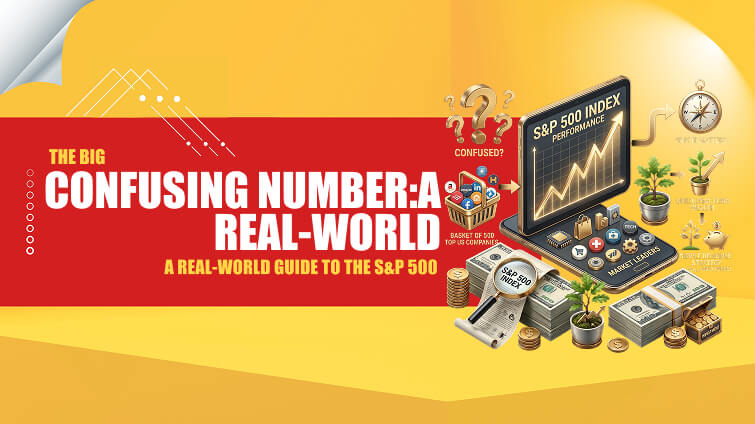
Think of the S&P 500 as a massive, curated shopping basket. But instead of groceries, this basket holds tiny pieces of the 500 largest, most successful publicly traded companies in the United States.
When people ask, “What is the market doing today?” they are usually referring to this basket.
- The “S&P” part: Stands for Standard & Poor’s, the financial company that manages the list.
- The “500” part represents the number of massive corporations within it, think Apple, Microsoft, Amazon, and Walmart.
When you buy a piece of the S&P 500, you aren’t betting your life savings on a single company surviving. You are betting on the entire American economy moving forward over time. If a company in the basket fails or shrinks, the list keepers kick it out and replace it with a rising star. It naturally cleans itself up.
A Real Story: My $5,000 Mistake (And the Truth About Trading Apps)
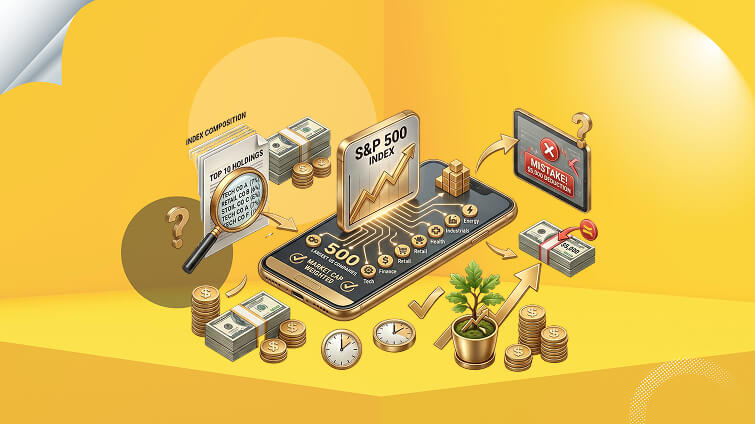
When I first decided to grow my money, I fell into a trap that kills many beginners. I didn’t look for how to start investing wisely. Instead, I looked for shortcuts.
I downloaded the best trading app according to a popular TikTok video. The app had bright neon colors, flashing lights, and digital confetti that popped up whenever you made a trade. It felt like a video game. I put $5,000 into a trendy tech stock because a forum told me it was going “to the moon.”
Within three weeks, that stock crashed. I panicked, sold it at a massive loss, and lost $2,200 of my hard-earned money.
That is when I realized something crucial. The best trading app isn’t the one that makes you feel like a high-rolling gambler.
The best app is the one that offers low fees, clear data, and allows you to buy steady index funds without drama. I stopped trying to guess which single company would win the future. I just bought the S&P 500 basket instead. I gues now you know what is S&P 500.
The Realities New Investors Face
When you start researching finance blogs, you will notice a huge mistake that new writers and amateur investors make. They try to sound like Wall Street hotshots. They use complex math formulas and preach about “buying the dip” or day-trading.
Here is what they don’t tell you: Day trading ruins people.
Statistically, over 90% of individual stock traders lose money over the long term. The actual path to wealth is incredibly boring. It involves setting aside a fixed amount of money each month, letting it sit, and ignoring the daily news headlines.
[ Your Money ] ──> [ S&P 500 Basket ] ──> [ Decades of Compound Interest ]
The “Sofa” Dilemma: A Practical Scenario
Let’s look at a practical scenario. Imagine your car breaks down, or you really want to buy a new couch. You have $1,000 sitting in your investment account. The stock market was down 10% that month.
If you invest poorly in single stocks, you might feel forced to sell at a loss just to get your cash out. But if you are holding the S&P 500, history shows us that the market eventually recovers. You learn to leave that money alone and to build a separate cash emergency fund.
How to Start Investing Wisely (Step-by-Step)
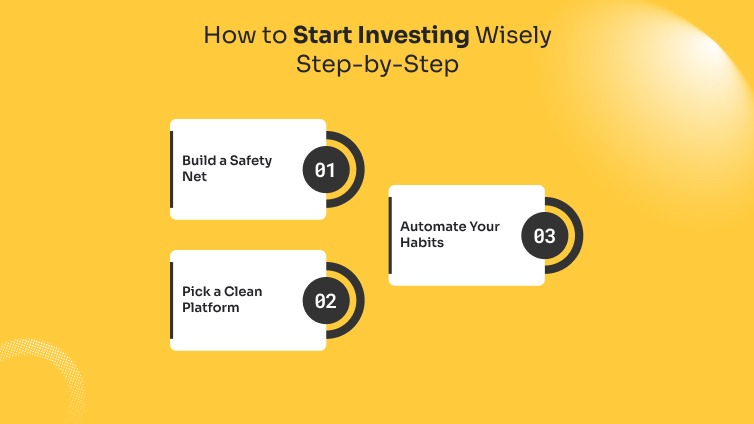
You do not need a degree in economics to get started. You just need a plan that protects you from your own emotions.
- Build a Safety Net: Before investing a single dollar in the market, make sure you have 3 to 6 months of living expenses saved in a regular bank account. This ensures you never have to sell your investments in a panic when life gets messy.
- Pick a Clean Platform: Look for a reputable provider (like Vanguard, Fidelity, or Charles Schwab) rather than a flashy, gamified app. You want a platform where you can set up automatic investments.
- Automate Your Habits: Decide on a small amount, even if it is just $50 a month. Set your account to automatically buy a fractional share of an S&P 500 index fund the day after you get paid.
By automating the process, you take human emotion out of the equation. You buy when the market is high and when it is low. Over time, your purchase price averages out beautifully.
What Happens When the Market Drops? (The Mental Test)
Let us be completely real for a moment. It is very easy to feel smart when the green charts are going up. Anyone can look like a financial genius during a bull market (that is just a fancy word for when stock prices keep climbing).
But What Happens When You Open Your Screen, And Everything Is Red?
I remember my first real market dip. That’s when I did not know what is S&P 500 properly. The S&P 500 dropped by about eight percent in a single week due to global inflation fears.
I watched $400 vanish from my account balance in a matter of days. My stomach completely dropped. I wanted to hit the “sell” button immediately just to save whatever cash I had left.
That is the exact moment you either become a real investor or a statistic.
If you panic and sell during a dip, you lock in those losses forever. You voluntarily make yourself poorer. But if you hold tight, you win. The historical data for the S&P 500 shows it has survived world wars, recessions, housing market crashes, and pandemics. It always breaks through to new highs eventually.
When the market drops, don’t think of it as losing money. Think of it as a storewide clearance sale. The companies inside the basket are suddenly cheaper to buy. If you keep your automatic monthly transfers running, your money actually buys more shares while prices are low. That is how real wealth is compounded. It takes zero technical skill, but it requires massive emotional control.
Share this article: